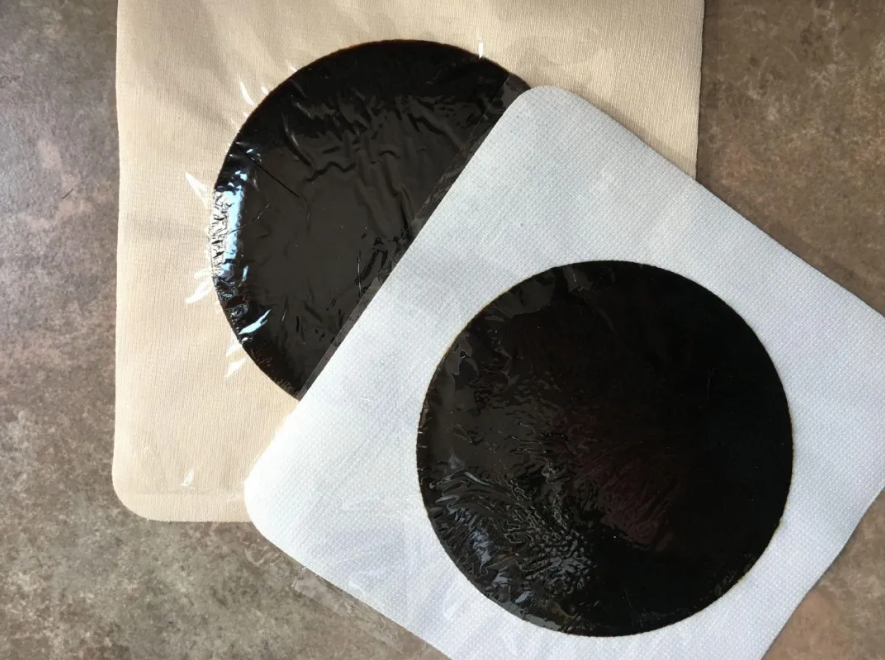
As early as the 13th century BC in oracle bones, there were numerous written descriptions of the experience and understanding of traditional Chinese medicine’s external treatment methods. During the Spring and Warring States period, in “The Yellow Emperor’s Inner Classic”, there was the statement “Apply wine made from cinnamon bark to relieve cold arthralgia”, using a mixture of white wine and cinnamon bark to treat ‘blood vessels affected by wind’, which was later hailed as the beginning of plasters and set the precedent for modern plasters. In the Jin Dynasty, Ge Hong’s “Emergency Prescriptions for Emergencies” was the first to record the use of ground raw rehmannia or luffa root for external application to treat injuries; and the use of ointment for external application to treat injuries.
The application therapy can treat various diseases, the principle being the same as that of internal medication, only the way of administration is different. When taking medication, it must first enter the meridians. The ones that can enter are the odors of the drugs. The applied medication is close to the skin and penetrates deep into the muscles. It can also transfer the odor of the drug through the skin to the meridians, enter the body, dissolve in the body fluids, and blend with them as one, achieving the wonderful effect of unity both inside and outside.
The efficacy of the patch therapy is mainly due to the fact that when the medicine is applied to the skin, it undergoes penetration, absorption or stimulation of the acupoints. It then exerts a direct effect on the local area or transmits through the network of meridians to achieve the purpose of stimulating the body and adjusting the functions of the system.
In the theory of meridians, the cutaneous meridians are the areas on the body where the functions of the meridians are reflected, and they are also the locations where the qi of the collateral meridians spreads. They are located at the outermost layer of the human body and serve as the protective barrier of the organism, possessing the functions of guarding the exterior and maintaining internal stability. They play the role of receiving external information and transmitting internal commands, and are the receptor and effector of the organism.
Therefore, the skin surface plays a very important role in human physiology, pathology and treatment. Adhesive application involves applying drugs to the skin surface, generating specific stimuli on the body surface, and through transdermal absorption and meridian stimulation, it can stimulate and adjust the disordered physiological functions within the body, achieving coordination and consistency of functions among various parts, enhancing the body’s disease resistance, and exerting the effects of eliminating pathogenic factors and unblocking meridians, in order to achieve the purpose of reinforcing the healthy state and eliminating pathogenic factors, and curing diseases.
Lorem Ipsum has been the industry’s standard dummy text ever since the 1500s.
* This is an affiliate link. After you register, I may receive a commission, and you won't be charged any additional fees.
No Responses