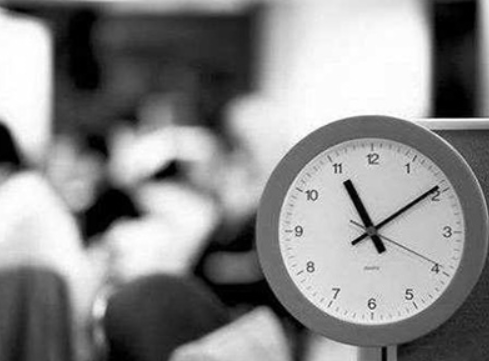
People spend approximately one-third of their lives sleeping. However, many people experience the problem of waking up in the middle of the night and being unable to fall asleep, which leads to insufficient sleep time or poor sleep quality. Over a long period of time, this can cause significant harm to the body, such as deteriorating mental state, weakened immunity, disrupted endocrine system, accelerated skin aging, and impaired liver function. The underlying reasons for night awakenings are mostly signals indicating problems with the corresponding internal organs.
The ancients divided a day and night into 12 periods. These 12 periods corresponded to the 12 internal organs of the human body and the corresponding 12 meridians. For example, from 11 p.m. to 1 a.m. in the night corresponded to the gallbladder meridian, from 1 a.m. to 3 a.m. corresponded to the liver meridian, and from 3 a.m. to 5 a.m. corresponded to the lung meridian. Blood and qi flowed ceaselessly within the twelve meridians, circulating and perfusing in a specific time and flow sequence, forming the blood and qi circulation of the twelve meridians.
Waking up between 11 p.m. and 1 a.m. is mostly due to problems with the liver. This period is known as the “Yin Time” when the blood and qi flow into the gallbladder meridian. The gallbladder meridian is in a state of vigorous activity, and it is also the time when the yin energy is at its peak. Yin represents stillness, so at this time, the body needs to rest quietly. The “Yellow Emperor’s Inner Classic” states: “All the internal organs depend on the gallbladder.” The entire body’s blood and qi depend on the ascending of the gallbladder qi. The physiological function of the gallbladder is to collect and store the bile secreted by the liver and supply it to other internal organs to assist in food digestion and metabolism. If one wakes up during the Yin Time, it will prevent the gallbladder from getting sufficient rest. Over time, problems will arise in the gallbladder meridian, manifesting as bitter mouth, vomiting, loss of appetite, abdominal distension, etc. Severe cases may also include jaundice, dry and rough skin, and heat sensation from the thighs to the outer side of the ankles. Additionally, “The gallbladder is the center of balance and the organ for making decisions.” The gallbladder governs decision-making. When the gallbladder qi is insufficient, emotional abnormalities such as being easily startled or timid are often observed.
The methods for tonifying the gallbladder meridian include tapping the outer side of the thigh along the gallbladder meridian, avoiding late-night snacks as much as possible, and frequently massaging the Fengchi acupoint (located on both sides of the back of the head, below the ears).
Waking up between 1 a.m. and 3 a.m. may indicate a problem with the liver. The “Xiao Chou” period is when qi and blood flow from the gallbladder meridian to the liver meridian, which is the golden time for entering deep sleep. The liver governs storing blood and has the function of storing and regulating blood volume. The “Su Wen · Five Zang Organs Generation Chapter” mentions, “Therefore, when one is sleeping, blood returns to the liver. The liver receives blood and is able to see.” “The liver opens to the eyes.” “The eyes receive blood and are able to see.” That is, when a person is in a sleeping state, blood returns to the liver, and the liver receives blood for nourishment of the eyes, then one can see. The deeper one sleeps, the better the return of blood to the liver. If one wakes up during the “Xiao Chou” period when qi and blood in the liver meridian are at their peak, it will cause blood to not be able to return to the liver, and the blood will continuously circulate through various meridians. When the liver is overworked under such conditions, problems will arise, manifested as dry eyes, blurred vision, numbness in the limbs, etc. Moreover, “the liver governs regulating and releasing,” and if the liver qi is abnormal, it often manifests as headache in the head and eyes, irritability, depression, chest and rib pain, etc. The “Huangdi Neijing” also states, “The liver is the general’s organ, where strategies and plans are formed.” The liver is closely related to the human thinking activities. When the liver qi is sufficient, thinking activities will be agile; conversely, waking up between 1 a.m. and 3 a.m. frequently will cause people to experience lack of energy and slow reactions during the day.
The methods for tonifying the liver meridian include massaging and kneading the Yin Bao point and Tai Chong point on the liver meridian, and striking and massaging the most prominent pain points for 5 to 10 minutes. You can also push the liver meridian: Sit down, straighten your right leg, and place your left leg flat. Place both hands together, with the palm roots pressing on the lower part of the thigh, and push along the position of the liver meridian on the inner side of the right thigh forward to the knee joint. Repeat this motion 50 times, then push the left leg.
Waking up between 3 a.m. and 5 a.m. is usually a sign of a problem with the lungs. During this period, qi and blood flow from the liver meridian to the lung meridian, marking the beginning of the body’s yang energy. The body’s qi and blood start a new round of distribution. The Huangdi Neijing states: “The lung is the official that oversees the distribution of qi and blood.” The lung governs all the meridians and is responsible for regulating qi. It means that the lung has the ability to be the chief executive, regulating qi, and redistributes the body’s qi, blood, and body fluids to various organs through exhalation and descent. A reasonable distribution process also needs to occur during deep sleep. If one often wakes up at this time and has symptoms such as nasal congestion, sneezing, chills, difficulty breathing, coughing, or wheezing, it is likely that there is a problem with the lungs.
To nourish the lung meridian, you can tap the lung meridian: Raise your forearm horizontally with your palm facing upwards. With the other hand, hold an empty fist. Tap and knead the lung meridian’s Yunmen acupoint (at the collarbone), Zhongfu acupoint (one inch below Yunmen), and Shangdi acupoint (the outer side of the thumb nail, 0.1 inch away from the nail angle) for at least 5 to 10 minutes. Apply more pressure at the areas where the pain is more pronounced.
In addition, one should follow the 12-hour cycle for diet and daily routines to balance the yin and yang of the internal organs, awaken the body’s self-repair potential, and achieve harmonious living in accordance with the seasons. Before going to bed, one can listen to some music to relax the brain. Avoid excessive use of mobile phones. Maintain a peaceful state of mind, stabilize emotions, calmly accept “night awakenings”, identify the cause, and take appropriate treatment.
Lorem Ipsum has been the industry’s standard dummy text ever since the 1500s.

* This is an affiliate link. After you register, I may receive a commission, and you won't be charged any additional fees.
No Responses